There are some telltale signs of what makes a movie good. It usually comes within the first five minutes of the film, where there begins some textural exposition, light entering the frame, things passing in the window as some erudite, minimalist, tracked out title sequences crawl across the frame. A musical motif is introduced that builds drama and reflection. If the film is truly good by the final credits roll, that which shows up in those first five minutes informs pretty much everything that may happen with such sharp poeticism that by the end, you are shaking your head with disbelief of what you just witnessed. Some directors establish these themes in all their films—like a consistent thread, they implore you to understand that you are entering their universe, and must succumb to their sensory language and “rules” to truly enjoy the picture.
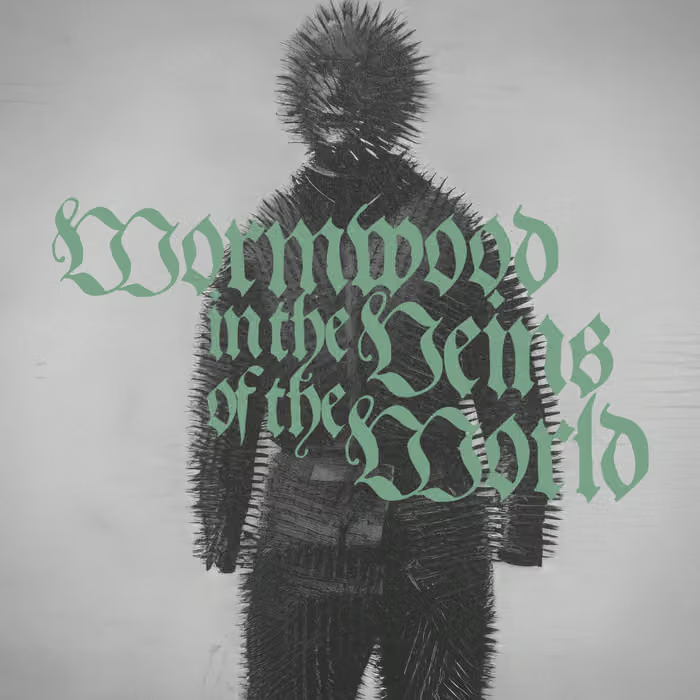
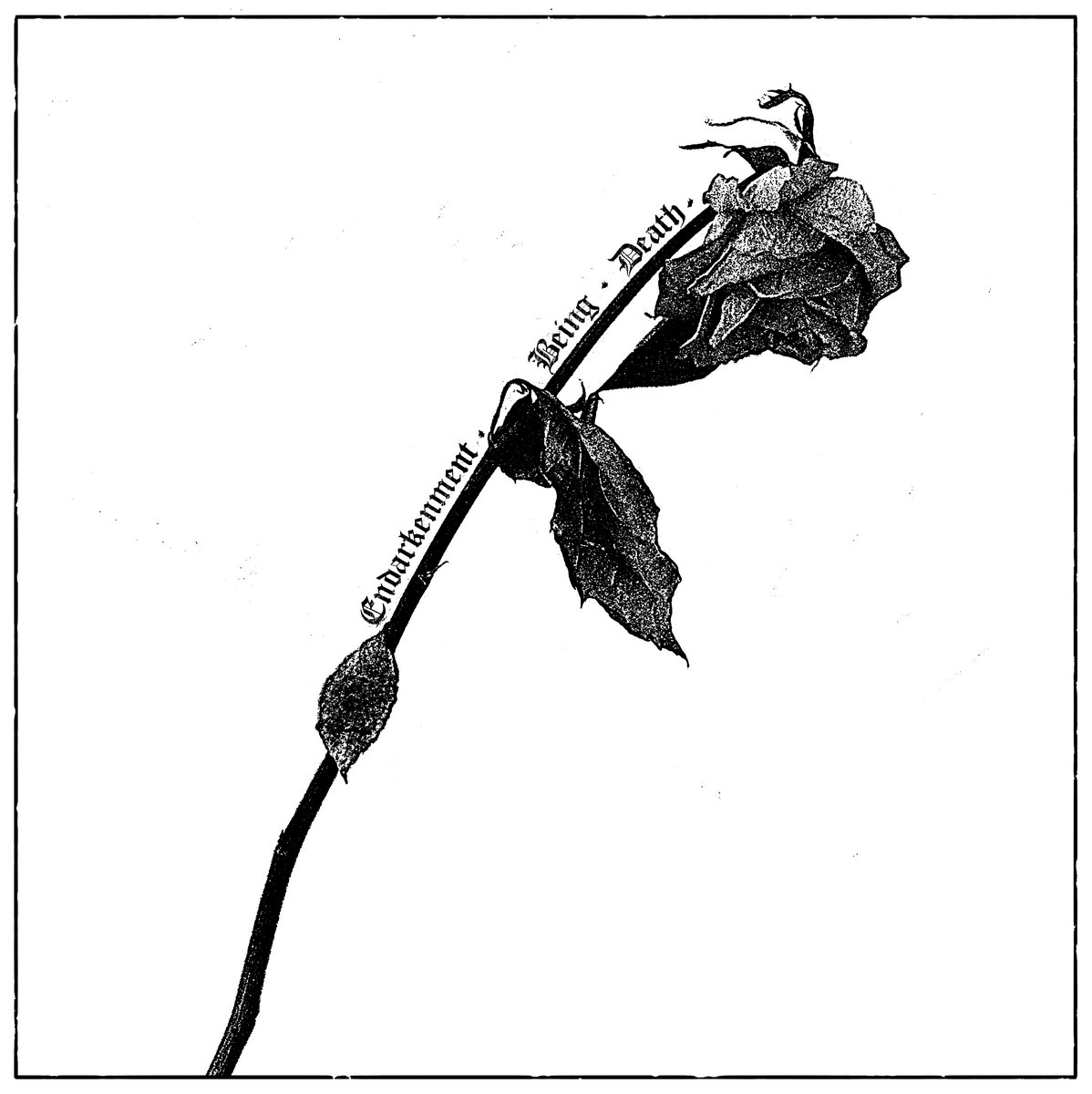
Endarkenment, Being & Death, Speglas’ third release on the Trust No One Recordings [Tim Bertilsson’s label], welcomes you into a world ripe with similar consistent customs. The titles of each release follow similar cadences, all ending on “& Death” — following along the paths of the shapes around each specific monochrome object on the album art—in this case a withering flower. Each visual and linguistic thread implies a certain state of existence which ultimately resolves with an untimely end.
Leading the film with “Woe”, the introduction takes you through a slowly flickering streetlight’s dim of a cobbled street, wind blowing past as a synth drones out an uncertain bellow. There are sounds of people, screams of crows in the distance as whispers enter the picture. Calling this work “Death Metal” or “Black Metal” feels cowardly and inaccurate. ”God remains dead / and we have killed him.
There is a vulnerability to this work that evokes melody over simply primitive brutality. The ferociousness here comes from Rosemarin’s heartfelt delivery and almost a certain faithful adherence to the folk canon of Sweden. By the time the group arrives at “Incessant Severance” you’re keen to discover a multitude of colors that flow like rivers across the palette of heavy metal without much restraint with full conviction in its triumph and its ultimate helplessness in the face of death and destruction. “Dearth” hooks you from the first note and does not loosen its grip by its 7:30 length. Every section is a masterful hook, rich with sorrowful leads and undulating rhythms, as though prepping your grave while gently laying the flowers at the tombstone with tears cascading into the trench.
As noted by the band, “The Spirit Postmortem” is not only a track from the album, but also part of the album’s overarching concept, influenced by Nietzschean philosophy. The song takes the idea of the death of the collective human spirit, the collapse of meaning and the fading drive to move forward and upward, and mirrors it to the biological stages of the dying human body.
There is a dichotomy to an album like this. While it packs the punch of a seasoned boxer, it also recognizes the protagonist’s lonely melancholy path as violence erupts around them. There is a faith and a grace to these songs that is confident and pronounced. From the clean strums of the “Ailing” to the gallops of “Hitherto Awry” Endarkenment, Being & Death takes no prisoners and means business. Crafted records like this shun the disbelievers proclaiming Heavy Metal to be dead—it is very much alive, free, and full of fire. As Simon Söderberg’s and Magnus Lindberg’s names slowly crawl in the credits — we sit in wonderment of how Speglas will be able to top this one if they ever set to sit back into their cinematographic chairs. For now — raucus applause from the gilded auditorium.