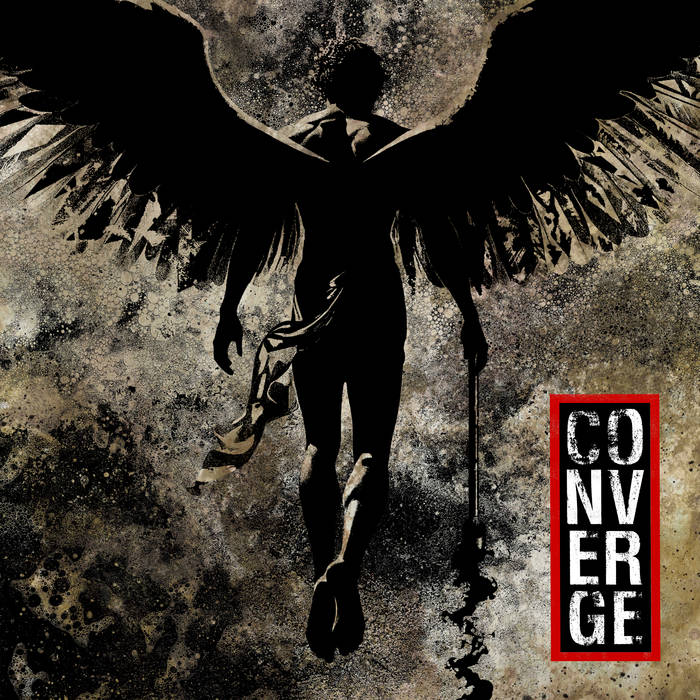
Punk, metal and everything in-between. Love may not be enough, but there is still Converge to hold on to.
Metallic Hardcore has been the sound of my adolescence — the first genre I fully identified with, together with my closest friends at the tail end of the 90’s. You know the constellation: Coalesce, Botch, Dillinger Escape Plan, Deadguy, the German Per Koro bands… and of course Converge. It shaped the way we listened, the way we saw the world, and the way we measured intensity. A lot has changed since then (us included) and Converge have changed too — but they’re still leading the pack in the one way that matters: evolving, honing their craft, absorbing influences from peers, idols, and friends, and still sounding unmistakably like themselves. Part of the community, nurturing it, giving back — revered in the underground in a way very few bands ever become.
Love Is Not Enough feels like it wants to underline that status even further. Not by nostalgia, not by “remember when”, but by momentum. There’s a very clear artistic posture around this record: keep it within the band, keep it physical, keep it real. No guest features, no shiny studio trickery that turns chaos into something sterile. The idea seems to be realism — letting the human edge remain, letting takes breathe, letting urgency stay urgent instead of getting polished into a safe imitation of itself.
And that word, realism, is the key to why this record hits so hard: Converge have always been about catharsis, but here the catharsis isn’t just violence-as-release — it’s the pressure of trying to remain a functioning human being in a world that seems structurally designed to grind empathy down into dust. The album title is the thesis statement, blunt and unromantic: love matters, but love alone won’t magically fix what’s broken around us. Still, there is love all over this album — in the craft, in the community sense, and in the refusal to let compassion die just because the times are trying their best to make cynicism feel “practical”.
My listening experience: a tightening spiral
What I noticed immediately is the sound: full, meaty, metallic guitar tone with crunch, and a rhythm section that gives the album a deep low-end shove. It pummels, but it also breathes. There’s a lot more dynamic play here than I expected — not less aggression, but more contrast. And that makes the hard parts feel harder.
The title track, “Love Is Not Enough”, opens like a door kicked off its hinges: frantic start, then suddenly those groovy verse sections that make your neck move before your brain catches up. It keeps switching back and forth — franticness to groove and back again — and it’s classic Converge in that way: controlled panic, but with a riff vocabulary that has matured into something almost luxurious in its brutality. “Bad Faith” is where the record’s “groove violence” starts showing its teeth — and for me it’s also one of the highlights of the whole album. Crunchy guitar, headbanging mid-paced insistence, and those ascending/descending guitar shapes that feel like the room tilting. There’s even a moment of riffing that, for a second, scratches that Mastodon-like nerve — not because Converge suddenly become something else, but because they’re confident enough to let weight and swing carry the aggression instead of speed alone. Then “Distract and Divide” yanks you back into the grind: fast, blastbeat-driven, galloping, and then tightening into something nastier towards the end. In parts it has that Napalm Death-style bite — that feeling of a machine chewing through metal rather than a band “playing a song”. It also feels thematically perfect: agitation, weaponized attention, the sensation of being pushed and pulled by forces you can’t physically see. “To Feel Something” is the first real curveball. It starts mathy and quirky, then collapses into a dissonant space where it’s basically drums, guitar effects, and voice in this uneasy interplay — like the track is trying to locate the nerve under the scar tissue. When the groove returns, it hits harder because you’ve already been made to sit inside the discomfort for a moment. And then the record pivots. “Beyond Repair” arrives like a sudden weather change. Slow start, foreboding atmosphere, an Industrial tint — ritualistic in a way. It’s the short respiration in the middle: an instrumental mood-setter that breaks the album in two and makes the second half feel like it’s entering a different landscape. “Amon Amok” fades in directly from that instrumental, and together these two feel like a deliberate hinge. Mid-paced, sluggish, Sludge-weight, rhythmically insistent — and yes, there are shades here that remind me of Cult of Luna and Neurosis. Not as mimicry, but as a widening of Converge’s palette: letting repetition and gravity do the talking for a while.
Heavy through diversity
One of my biggest afterthoughts is that this might be Converge’s most metal album — not because it abandons Punk/Hardcore (it doesn’t), but because mid-paced, heavy, absolutely headnodding and headbanging grooves take a key role throughout. The frantic and chaotic parts are still here, but the grooves feel more central than before. And the performances are diverse in a way that makes the album feel alive rather than “perfect”.
“Force Meets Presence” is a great example of that dynamic. It starts stomping and heavy, flips into a fast part where the guitars feel almost Rock’n’Roll in their momentum, throws in frantic metal licks, and then lands on a heavy ending that feels like it drops a concrete slab on your chest. It’s Converge doing what they do best: turning structure into impact.
And then there’s “Gilded Cage” — the slow-burn jewel. Slow moody start, rolling bass that propels the whole thing forward, and, importantly, clean singing by Jacob Bannon that doesn’t feel like a gimmick or a “we’re trying something new” marketing bullet. It feels like a crack in the armor. Desperation and longing sit in the middle of the track, then it opens up into a moodier interplay section before swinging back to that mid-paced mosh gravity.
“Make Me Forget You” is almost shockingly straightforward by Converge standards: fast, melodic, Punkrocky, clear verse/refrain logic. Simple — and that simplicity works as a kind of mercy, a brief lift of the boot off your throat. The group shouts at the end and the instruments ringing out into the transition feel like a corridor leading straight into the closer.
“We Were Never the Same” starts bass-led, and the guitars carry this interesting flavor — a bit of Cave In in the texture, and even a flash of Queens of the Stone Age-style swagger in the vibe… but of course filtered through Converge’s own clenched-teeth urgency. It’s mid-paced, but it doesn’t relax. It feels like the record’s final statement: not tidy, not comforting, but human — as if the album’s whole pressure-cooker theme ends not with resolution, but with the honest admission that we’re all trying to hold it together with imperfect tools.
No fat. Power and purpose.
My overall feeling after multiple plays: this is an album built like a blade. Lean, purposeful, and relentlessly forward-moving. It carries anger, pain, and frustration, but it doesn’t wallow — it channels. There’s a sense that the band wanted every song to matter, every transition to push the next moment into existence. And in that way, Love Is Not Enough reads less like “album number eleven” and more like a band sharpening their identity to a razor’s edge at a point in their career where they absolutely don’t need to prove anything.
Love may not be enough. That’s the bleak headline.
But there is still Converge — and sometimes that’s exactly what keeps you going.