The other day, a buddy of mine asked me to name some bands I’m covering at the moment. “Witch Ripper,” I replied, singling out perhaps the best of the bunch. My friend’s forehead bunched up, as if to say, “Huh?” without actually verbalizing the sentiment. “Which Ripper? You mean to tell me there are more than one now? Doesn’t Tim Owens own the rights to that nickname?”
And that, ladies and germs, is why I pursued a career as a music journalist instead of a standup comedian. Don’t bother tipping the wait staff; I’ll give you a link to my Patreon instead.
In all seriousness, it’s a safe bet that even legit fans of heavy music aren’t familiar with the Seattle Sludge-slingers. With the number of bands seemingly more numerous now than at any other point in human existence, it’s very easy to miss even the artists your friends and the critics recommend the most.
At the same time, Witch Ripper haven’t done themselves many favors since forming in 2012. It took vocalist/guitarist Curtis Parker, drummer Joe Eck, guitarist Coltan Anderson and original bassist Josh Robertson six years after their formation to finally put out their debut LP Homestead. And between that release and the new Stoner slab at hand in this review, Witch Ripper anted up with just one other full-length The Flight After the Fall (2023).
One of more common culprits preventing a band from finding its footing, if not discovering the essence of the project, are numerous lineup changes that are the equivalent of an adolescent’s growing pains. Witch Ripper can find no quarter in that theory, however; to date, the only proverbial change of their guard was the departure of Robertson in favor of new bassist Brian Kim, whose tenure with the band reaches the 10-year mark this year.
However, note in the above paragraphs that this writer doesn’t fault Witch Ripper or cast aspersions on them for taking their sweet little time. We’ve come to accept that for many bands the primary purposes are to get flimsy coveted likes and retweets on social media and to build up their fanbases so that they can at least break even on tour instead of draining their meager coffers.
Simply put: Why rush to become a buzz band when the transfixing glow that comes with it will evaporate as quickly as it materialized. To be fair, there is a strong counterargument to be made: Mastodon, High on Fire and Baroness, which are kindred-ish bands to Witch Ripper, have done quite well for themselves thanks in part to keeping their creative juices flowing at practically all times.
But it’s by taking the former approach that Witch Ripper have deftly avoided pitfalls like getting overexposed or even overplayed, and they’ve instead siphoned that time into developing a coherent and well-considered sound. All the while, because the dudes have logged so many years of playing together, they’ve gracefully entered their mid-career years without coming across as too harried, overzealous and unconfident.
Homestead was pretty much an auspicious debut for Witch Ripper, but very much like their three aforementioned brethren, the young band’s grand ambitions ended up weakening the execution of the record’s seven songs. For all the talk of the dreaded “sophomore slump,” an equally common misstep by early bands is treating their first albums like collections of demos instead of proud, well-considered debuts that require a great deal more time.
Witch Ripper’s second album, The Flight After the Fall, showed signs that the band was well on its way to graduating from dog training with flying colors. With more of an emphasis on strong songcraft than bludgeoning brutality, the far more accessible and neatly executed record called ASG to mind. Witch Ripper seemed to not only challenge their fans but themselves as adept musicians. The five-song album’s closer, “Everlasting in Retrograde Pts I & II” – which ran just shy of 17 minutes – could be construed as an answer to Witch Ripper’s detractors, insisting that the band knew what it was doing.
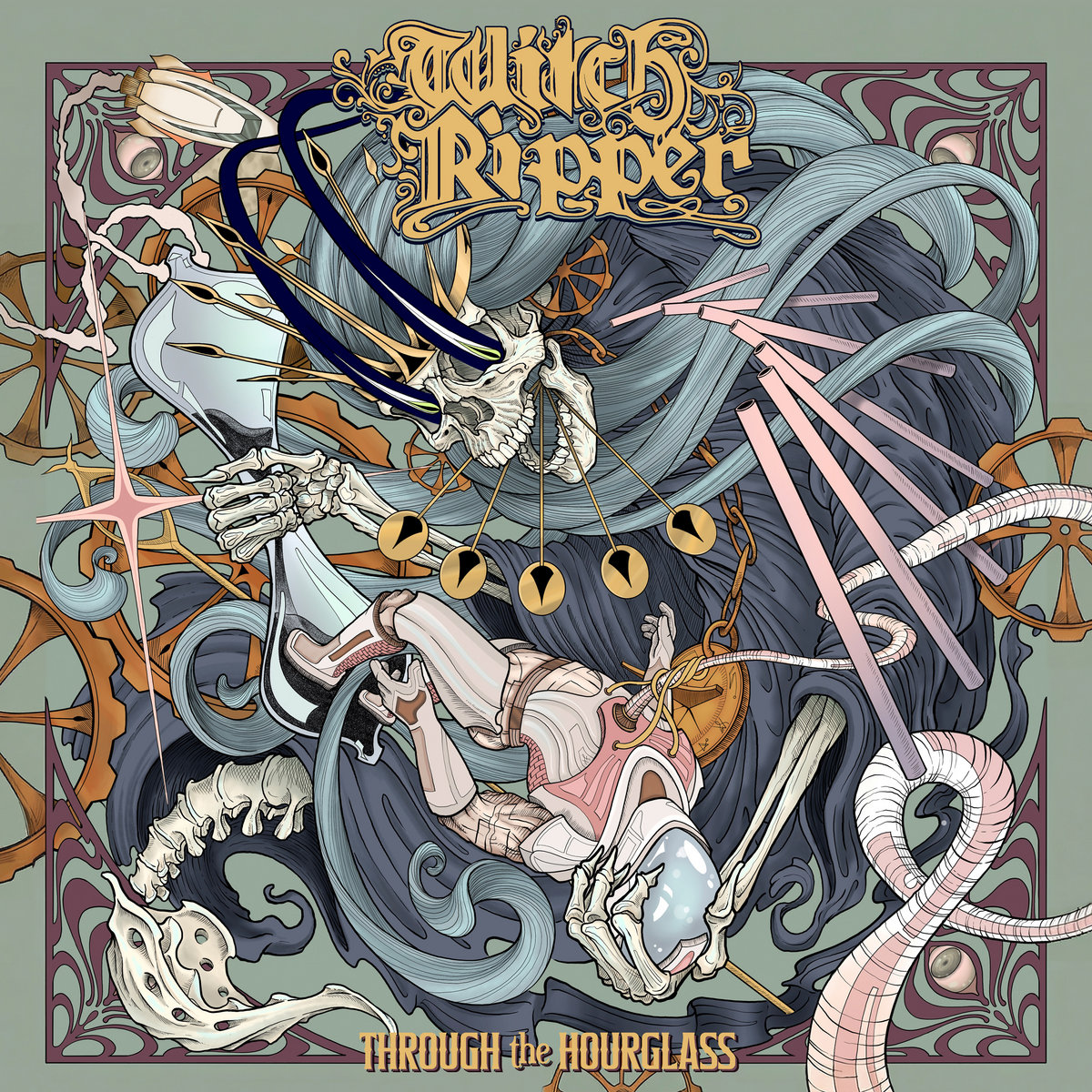
That leaves us with Through the Hourglass, in which Witch Ripper dishes up such unexpected beauty and charm that even those familiar with the band’s first two records will be pleasantly surprised. While the band gets almost all the kudos for upping their songwriting yet again (on “The Portal” and “Symmetry of the Hourglass” in particular). It’s not exactly new for a band to blend melody, Prog and hooks – but the measurements that Witch Ripper mixed into their sound are perfectly apportioned. While it almost turns out to be a mistake to read the last chapter of a book before starting it, the final song on Through the Hourglass, the nine-minute “The Spiral Eye” is a gorgeous epic that tugs at the heartstrings – a feat that bands of the Sludge/Stoner ilk usually show they don’t have the skills to pull off. But Witch Ripper do indeed possess that superpower, and it’ll be exciting to see what cards they pull out of their collective sleeve on their next album.