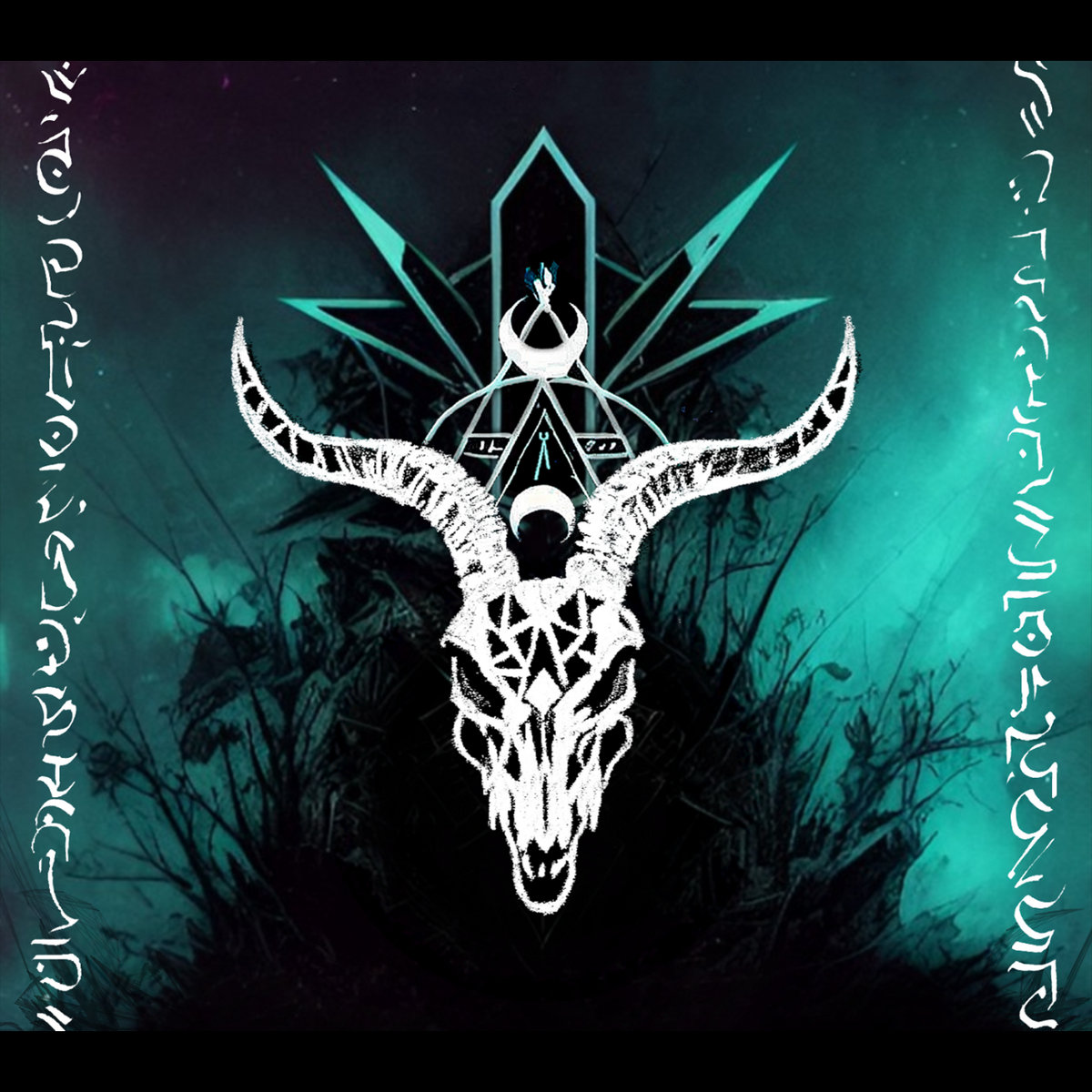
Rituals, soundscapes and the imagery of Scandinavian folklore are the basis for the new Askemåne record, named Kollisjon. The fascination derived from Northern culture and history has culminated in the second long-play by the French band, in a more structured way than the previous works.
On March 19th, the French collective Askemåne self-released their new record, Kollisjon. This record fits to the European Neo-Folk scene, a field well defined, but that sometimes is capable to offer immersive experiences when treated with coherence. The band, active since 2021, has immediately chosen to present themselves not as a traditional band, but as a sound collective (or a tribe). Kollisjon is more of a sound pathway than a collection of tracks, built around the voices and the percussion, with everything else built around them.
The structure of the record is clear from the first tracks: tribal percussion, cyclical, sometimes hypnotic, where the voices and the choirs alternate more guttural parts with other more liturgical; as Franco Battiato said: “Nei ritmi ossessivi la chiave dei riti tribali” (“In obsessive rhythms [lies] the key to tribal rites”).
The musical language used by the collective from Besançon recalls names like Wardruna or Heilung. This is at the same time a strength and a weakness of this work; while the band demonstrates to have internalised this aesthetic, they find it difficult to truly detach themselves from it.
One of the most convincing aspects of Kollisjon is the use of the vocals. More than a narrative use, the voices create an atmosphere that builds soundscapes; the use of different vocal timbres creates a kind of “abstract rituality” that points to a universal ritual, not to a specific one.
The composition instead brings some reserves: some songs apparently don’t evolve during their path, they change dynamics, but not in a way that captures the listeners’ attention. We pass from more rarefied moments to choral peaks that, song for song, become more predictable. For who is not a fan of this genre, this could generate monotony.
However, the rhythm section is strong and really effective, it’s confined to an atmospheric function. The percussions are able to create that “trance” and support the creation of the tribal atmospheres, but hardly become a breaking point or a passage to an evolution of the song. In this sense, the record prioritizes the experience of the full listening of the album instead of choosing to play the tracks one by one or even single ones. What really works for this record is the coherence. Every single element is part of a definite idea. From the production to the timbre choice, nothing is casual and gives the album a strong identity. But, this coherence risks turning into rigidity: this work rarely allows for deviations, moments of discontinuity or unexpected openings.
In the end, we can say that Kollisjon is a solid record, immersive and well-defined, that confirms Askemåne as an ambitious project in the Neo-Folk European scene. At the same time, the sensation remains that the collective hasn’t yet found its language and proper identity. More than a point of arrival, this album appears to be a phase of consolidation: effective, but still in search of a true, distinctive identity.