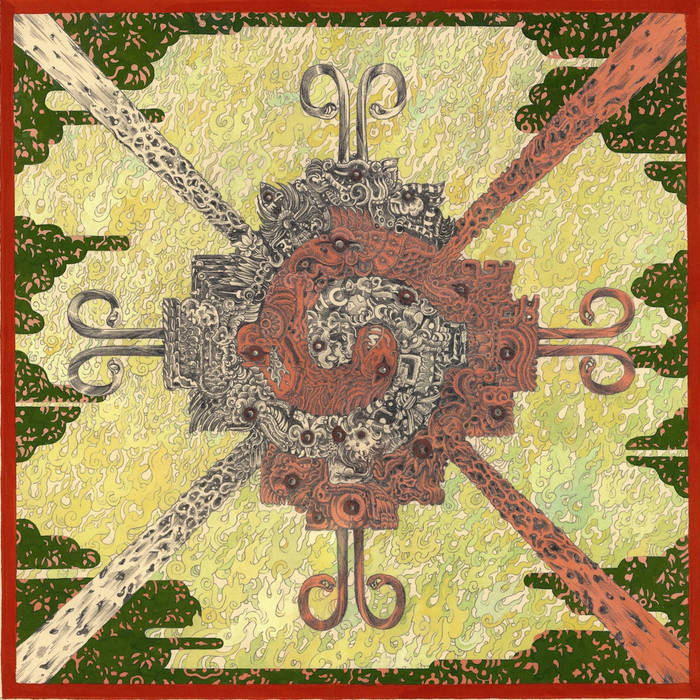
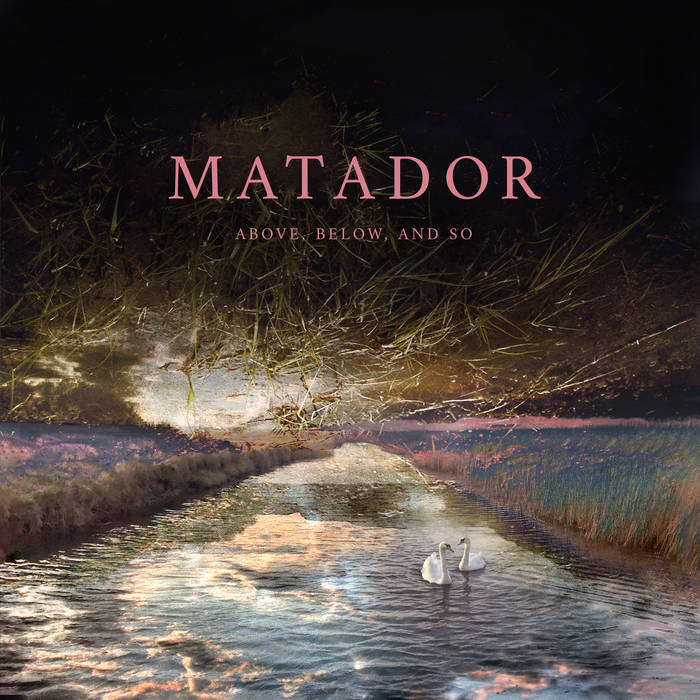
The compelling new Matador record is a welcome respite from the outside world!
Writing introductions is hard, doing something which isn’t easy is normally quite rewarding. Even taking into account the difficulty, I’ll always try and be chipper and upbeat here. But this week, it’s been a constant bombardment of things which I find terrible, so much so that I find my normal upbeat nature just going for a lie down and a cup of tea - and I don’t even drink tea! Thank goodness for music. To be transported away from the horrors outside my window and to find solace in the embrace of an aural comfort blanket is something for which I will forever be thankful. It certainly helps when the said blanket is the new album from Brighton based doom merchants Matador.
There’s a particular kind of record that doesn’t so much start as it does emerge. You don’t press play; you step across a threshold. Above, Below and So is very much that kind of album — one that unfolds like weather systems rather than a straight up narrative, governed by pressure systems of mood, density, and release.
Matador have always understood that heaviness is not a single dimension. Here, they stretch it vertically. The title reads like a cosmology, and the music follows suit: ideas rise, collapse, re-form, then drift sideways into places you didn’t expect to be standing. It’s an album obsessed with position — where the listener is placed, where the band situates themselves emotionally, and where the songs decide to leave you when they’re done.
What immediately stands out is patience, this album refuses the modern compulsion to declare itself within the first thirty seconds. Themes are introduced obliquely, allowed to breathe, then quietly recontextualized later on. Take the song “Glitter Skin” for example, riffs don’t arrive as blunt instruments but as slow-turning gears, grinding against atmosphere rather than cutting straight through it. When the album does lean into weight, it feels earned — like gravity finally asserting itself after a long climb, it’s stunning.
Structurally, the album behaves like a slow spiral. Motifs recur, but never quite the same way twice. A melodic idea introduced in relative calm later returns scarred, distorted, or hollowed out, as if it has lived through the intervening minutes alongside you. This gives the album a sense of internal memory — a rare thing, and one that rewards full-album immersion rather than casual sampling. Moments of beauty don’t arrive as catharsis so much as recognition: the quiet understanding that light doesn’t cancel out darkness, it simply coexists with it.
What makes the album particularly compelling is its refusal to posture. There’s no sense of the band reaching for relevance or spectacle. Instead, it feels inward-facing, almost private, as if we’re overhearing something not originally intended for an audience. That intimacy gives the heavier passages more impact and the quieter moments more fragility.
By the time the album closes, you don’t feel finished with it — just repositioned. Like stepping outside after a storm and realizing the landscape is the same, but your relationship to it has subtly shifted. This is not a record built for instant allegiance; it’s one that grows heavier the longer it sits with you, accumulating meaning through repetition.
In a landscape crowded with releases eager to shout themselves hoarse for our attention, Matador choose to linger instead. They trust the listener and they trust silence. In doing so, they deliver an album that doesn’t chase the easy route, but guides you through the unforgiving landscape, and in these days when the world outside my window seems darker than ever, I’ll gladly take their hand and let them guide me, utterly outstanding.