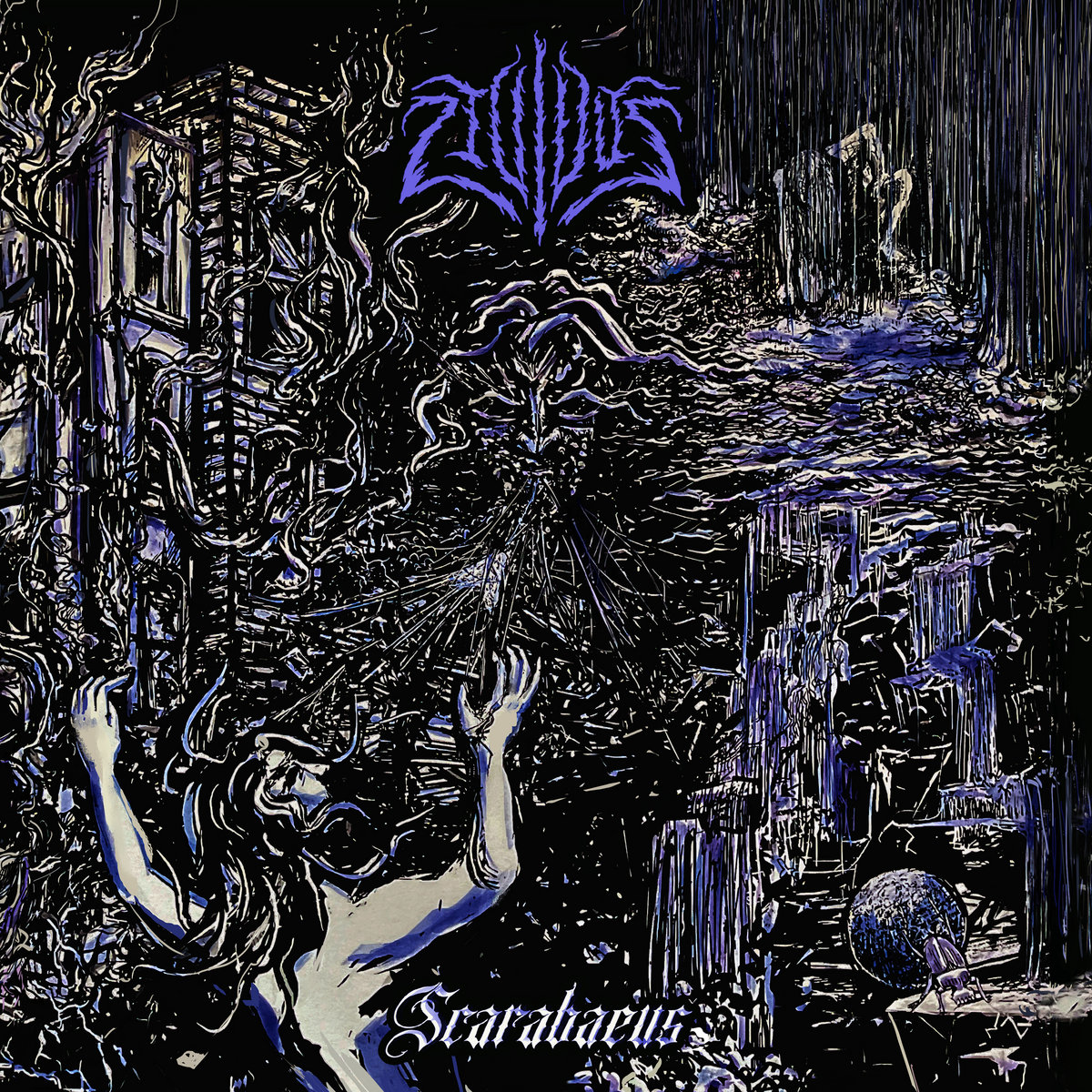
There are cities that don’t merely host heavy music, they weather it until it learns new postures. Portland is one of them with the rain as a metronome, rehearsal rooms as second homes, long seasons of gray where distortion becomes a heavy coat spilling truths from its insides.
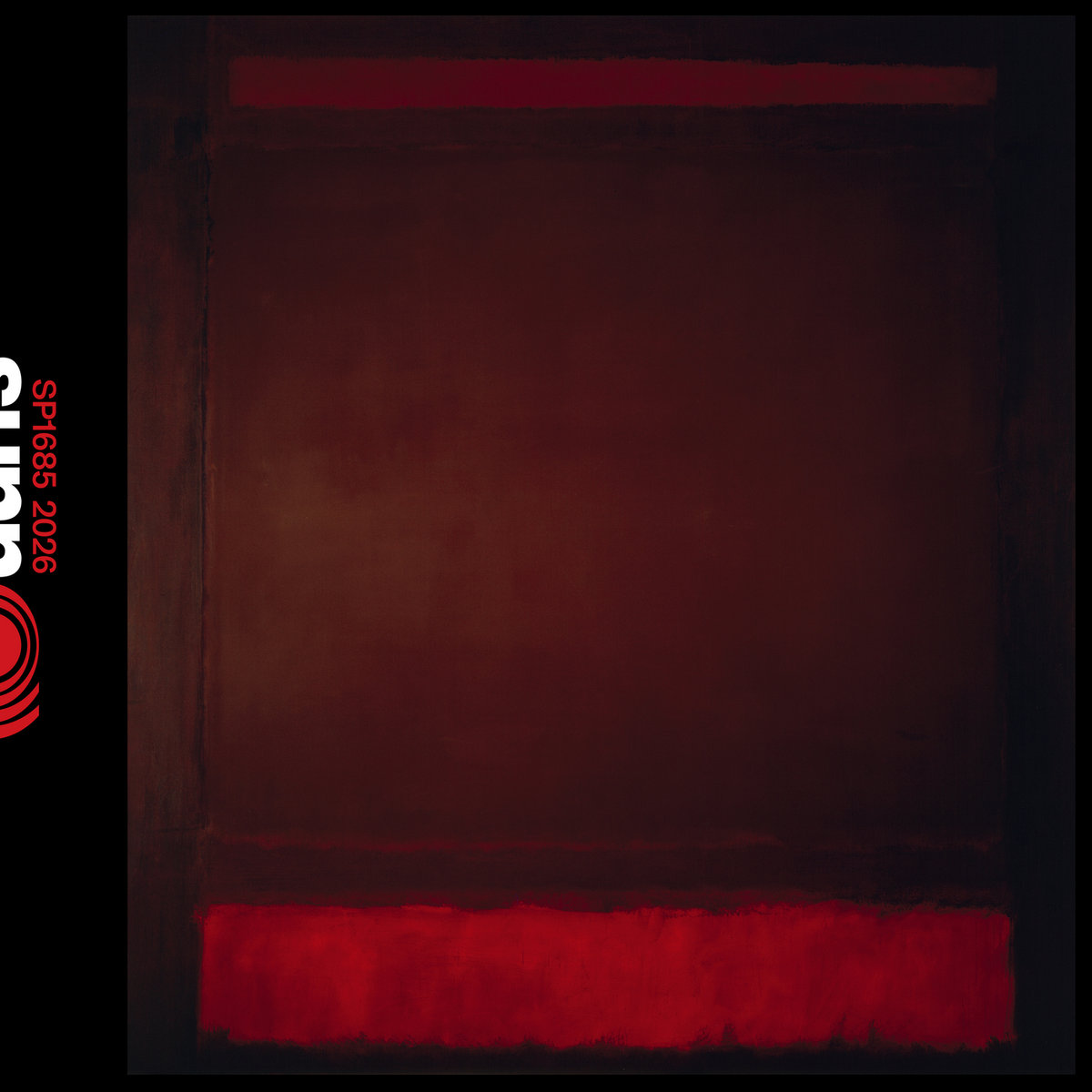
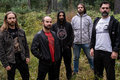
Scarabaeus arrives from that climate with mud on its boots and clarity in its eyes, a debut full-length that dwells not on the instant of impact, but on what lingers after—when the body keeps living, and the mind keeps returning. Lividus began in 2017 as an impulse shared by vocalist/violist Uta Plotkin and bassist/vocalist/artist Connie Wang, both reaching for something heavier and stranger than the predictable lanes around them. Over time, the lineup cohered into a distinctly Pacific Northwest kind of “supergroup,” not as spectacle but as sediment with players whose prior lives in other bands formed a layered grammar of heaviness. Plotkin brings the hard-won command of ex-Witch Mountain; Christy Cather’s history with Ludicra carries that sense of blackened breadth and narrative bite; Rob Shaffer arrives with the severe silhouettes of Uada and the shadowed weight of Dark Castle; and Michael Thompson (ex-Silver Talon) brings drumming that pivots cleanly through tight corners with ease and distinction.
The accumulated experience is not resume-driven. Scarabaeus results in a band with fewer boundaries. In a New Noise interview, they describe writing in “riff bricks,” fragments that get stacked and mortared through collaboration rather than forced into a predetermined blueprint. You can feel that method in how the songs move—no technical exhibition, but a scene that keeps changing light and volume. The arrangements are intricate without feeling overbuilt; the shifts are deliberate, turning your head because you heard something behind you.
The band call it “adventurous, weird metal,” and Scarabaeus earns the phrase by restoring an older spirit of risk: the eccentric, exploratory ’90s thread they cite, where progressive impulses didn’t yield sterilized polish, and melody didn’t summate to safety. The influences they name - Voivod, Hammers of Misfortune, Death, Nevermore — are present less as quotations than as temperaments. Angularity, theatrical shadow, sharp-edged musicianship, and that particular feeling of metal thinking in real time with the orbit widening further to bands like - Emperor, Deceased, Sigh — carrying the album that same appetite for scale and surprise.
Plotkin’s voice is the album’s most immediate compass. Her clean lines and harsh eruptions don’t read as separate personae so much as a single instrument changing pressure—instinctive, responsive, unsentimental. The viola, too, matters because it isn’t ornamental; it’s a filament of tension threaded through the guitars, a strand of human grain that can glow or scrape depending on the song’s weather. Wang’s bass keeps the floor solid, and the two-guitar presence thickens the air without blurring it into fog.
Lyrically, Scarabaeus is committed to aftermath—trauma not as an event, but as an enduring condition. Plotkin speaks in an interview about the brutality of what follows, the residue you carry “for the rest of your life,” and the record treats that idea as structure as much as subject. “Jettatori” turns superstition and suspicion into social dread, a cursed gaze that gathers consequences; “Amphisbaena” embodies dividedness with serpentine imagery and knot-tight phrasing; “Viaticum” tumbles and ascends through mud and omen, less redemption than exertion. Even the ritual vignette of “The Empty Circle” feels like a small theater for fear’s materialization.
That focus on living with a lingering tragedy, rather than escape, gives the record its particular weight: cumulative, persistent, unhurried. Track six — “they blew the flies from their lips before they spoke” — lands like a bruised prose-poem about hunger and storytelling, and the later run (“Sealing the Wound,” “Make No Mark,” “Sulphur”) keeps returning to survival as a craft with no neat closure, but the ongoing work of making a life that can still be touched by rain and the elements. “The Aftermath of the Flood” gathers the album’s imagery into catastrophe - as-landscape: time rushing on, love dissolving, the self left standing in the slow retreat.
Keith Merrow’s production is crucial here because it preserves density without turning it into a blur — with every element feeling distinct, nothing flattened into modern technical sheen. You can hear the band’s care for detail as a form of honesty: the guitars bite, the drums articulate the turns, the viola remains audible as a real texture, a human edge. Scarabaeus doesn’t posture as a manifesto, it simply arrives as the natural convergence of lives spent in different corners of heavy music, now speaking together in a dialect that feels newly possible—ornate, severe, and quietly alive.