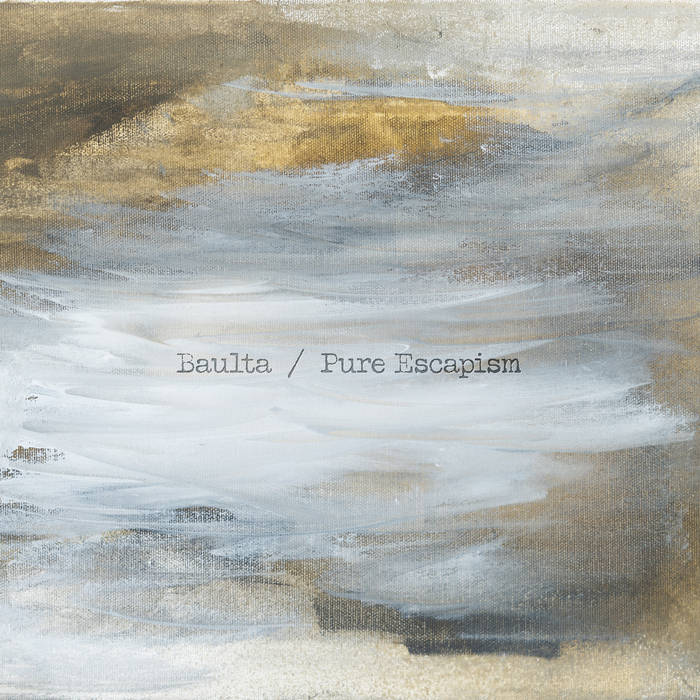
Rewrite your AOTY-list for Post-Rock, because here comes the top contender for 2025.
This release from Baulta will make all you Post-Rock fans who have already made up your mind with an AOTY list want to rewrite it. I guarantee that you will do that after just one listen, because this is first-class sweeping Post-Rock with expansive musical ideas seeped in memorable melodies ranging from the most delicate piano- and violin-induced parts to surging and gushing crescendos.
I first encountered this Finnish band at a festival called Vivid Festival in the southern part of Norway in 2016, and I remember that this unknown band took the audience by storm. In 2011, the band had debuted with Deeply Sorry to Interrupt Your Megalomania and released a pinnacle of albums every year until 2014 when there was a hiatus that made us wait more than six years for Another Second Chance (2021) that we described like this: “It is a warm, lush and reassuring feeling record that will please Baulta lovers, and surprise listeners new to their music.” (Wouter’s review). And now, four years and eight months later, it is time to celebrate a new release from Baulta. The same that was written in 2021 can be said about this album. Only more so. They have reached yet another, impossible one would think, pinnacle and surpassed themselves.
This is Post-Rock, and essentially it is guitar-based with bass and drums. But the music here is far more expansive than your average Post-Rock album. While hard riffs appear, tremolos and higher-pitched guitars also, the overall impression is of a relaxed, delicate, and often tender soundscapes that embrace all the different enthralling melodic themes that emerge in each track. Even in the cascading parts. The standard Post-Rock set-up is used but additional synths, piano, violin, and vocals can be found as well. Everything is orchestrated into one entity that makes for engaging repetitive listening, and one of the most exuberant Post-Rock albums heard in a while.
Baulta has always had a knack for making melodies that turn into earworms after repeated listens. After having spent some time with this album, you will in fact, have a plethora of competing earworms. It starts with “Death Stare” where you also meet the engaging counterpoints that are another characteristic of Baulta´s music. The song fades in, and hard bass and drums appear, with riffing and chugging guitars upon rumbling bass. Synths begin to rise in the background of the fast-paced hard guitars. Then the musical flow turns; clear droplets from the synth form a memorable melody that flows forward with the main theme, supported by the bass in an upbeat tempo. Joining in towards the end are higher pitched guitars and the music fuses back into crunchtime, soon to be replaced by the clear synth melody until it all melts together to end the song.
The use of the synths on this album is remarkable. It fits so well with the Post-Rock sonics. On “Brainwaves” there are clear keystrokes from the synths paired with plucking guitar and low-end bass, providing depth together with the drums at a slow pace. In this, a melody is formed, and the musical flow surges as the guitars play melodic lines in parallel. A fuzzy guitar is delicately strumming a theme in the sonics. The drums make good use of space, and the flow slowly begins to grow as more instruments join and surround the main guitar. The bass is heavy and deep. A high-pitched guitar flies over the soundscape, playing an engaging part as the sonics expand with a sense of crescendo.
On “Tears Dried Out Too Soon” there is a tender piano that is joined by a delicate bass and mellow and soothing bow strokes from the violin. Throughout, the piano and the violin hold the flow of the music until it rises gradually led by distorted guitars, forming a memorable melody upon a heavy bass-laden sonics until it simmers down with only the piano. The next track, “El Desierto” is a gem where the music shifts between surging guitars and delicate strumming guitar and piano with the tempo of a waltz forming an extremely engaging theme.
The use of synths and the beats from the rhythm section on “How On Earth?” seems like a nod to the 80s Electronic scene, contrasted wonderfully with a sliding guitar immersing vocalizing deep in the layers. Every song has a way to fade in with sound effects, but none so mysterious as on “We Have All Been Here Before” alongside a dark flow of a bass line. A mighty piano emerges in the middle, and the melodic theme is dark, yet at the same time ear-catching, and with a repetitive melody. Short light piano droplets appear, and in the middle of the musical flow, one can hear the gentle strokes of a violin bow.
There are so many remarkable features to be found in the textured layers on this albums – and one will discover one after another with repeated listens. On “As Wine Turns To Vinegar” where the main musical flow is lazy and contemplative, and the hard rhythm contradicts it - a delightful counterpoint. Although gentle in the flow, the music slowly changes, and it becomes harder and heavier as the piano enters the flowing music and high-pitched sounds broad sounds from the synths with engaging melodic themes.
The album ends with the delightful “Nothing Less Than Everything” that also displays the two sides of the band´s music, but in new melodic ways. A guitar picks up the theme and develops it further into the layered musical flow. Adding a violin to the sonics just makes it perfect before the sounds fade away and give way to a lone piano that gives the music a new direction and builds a cascading crescendo with a high-pitched solo guitar soaring above. The drums hammer on and the bass at the low end with the melody, while layered cascading music flows and yearns, piano and violin included, making an utterly engaging end to a fantastic album.